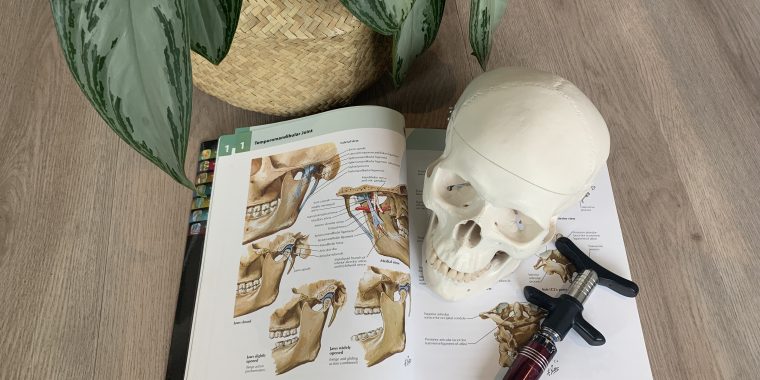
Jaw Pain

If you’ve ever suffered from jaw pain, you know how irritating it can be. Perhaps you’ve tried trips to the dentist, mouth guards, and even have avoided eating certain foods to prevent irritation. But have you ever considered visiting the chiropractor?

When patients describe having jaw pain, they’re often describing pain caused by the temporomandibular joint (TMJ). This joint connects your skull to your jaw bone, and involves the muscles needed for opening and closing your mouth. Within the joint is a small cartilage disc (similar to those found in your spine), which is responsible for smooth jaw movement. As your mouth opens and closes, the disc and joint act like a hinge, allowing you to talk, chew, and yawn.

But like any other joint in the body, the TMJ can begin to cause pain and discomfort when it isn’t working properly. The surrounding muscles can get tight and stiff and the disc can be misaligned within the joint, all causing the smooth motion of the joint to be disrupted, leading to temporomandibular joint disfunction (TMD). Teeth grinding, nail biting, gum chewing, arthritis, and even stress can all lead to TMD, and often cause to popping or clicking of the jaw, tender muscles, and/or the inability to fully open your mouth. Over time, this can lead to headaches, neck pain, and even ringing in the ears.

Despite its complexity, TMD and its associated symptoms can be managed and helped with various treatments. Your dentist may fit you with a mouth guard to prevent grinding, and you may find it helpful to eat softer foods and avoid chewing gum. Chiropractic care can also be very effective for treating TMJ problems. Muscle work can be done to release tight jaw muscles, including those on the inside of the cheeks, and gentle adjustments of the TMJ can help the disc become realigned between the jaw and skull. Patients often see a rapid change with their ability to open and close their mouth after an adjustment. Exercises and gentle stretches may also be prescribed to help patients care for their TMD at home between visits.

If you or someone you know is suffering from jaw pain, or for more information on our treatment for TMD, contact us today.


Tennis Elbow

As summer gets into full swing, many of us start returning to outdoor activities we haven’t done since last year. And with this increase in yard work, summer sports, and home renos, some aches and pains are bound to come with it.

If you’ve noticed your elbow and forearm feeling painful, weak, or even tingling, you might be suffering from tennis elbow, even if you haven’t picked up a racquet. Despite its misleading name, tennis elbow is a common injury that can occur with any type of repetitive activity – not just tennis. Swimmers, baseball players, carpenters, and even cashiers can all suffer from the condition.

Tennis elbow occurs slowly over time and often without a big injury. The overuse causes muscles and tendons in the forearm to become irritated and weakened, causing micro-tears in the tissues and results in inflammation. It can be acute or chronic, and most commonly appears in those ages 35-55.

Those suffering from tennis elbow often describe difficulty turning doorknobs, lifting their morning cup of coffee, making a fist/gripping, or even just lifting everyday objects.

Treatment often consists of modifying or taking a break from the repetitive activity that caused the injury, and icing the area. Chiropractors can ensure that the joints in the arm and wrist are moving properly, perform muscle work on the affected tissues, and prescribe stretches and exercises to strengthen the area. And your acupuncturist and massage therapist can also help in similar ways to get you back to your activities quickly without pain.

While it may start slowly, tennis elbow shouldn’t be ignored, as the pain can spread into the wrist and hand and is unlikely to heal on its own. If you think you may have tennis elbow, book an appointment and we’d be happy to help!

Whiplash

We dread it, drive slow and safe, but sometimes no matter what we do, we just can’t avoid the possibility of a motor vehicle accident.

And while a small fender bender might not seem that serious, it can lead to whiplash, a soft tissue injury to the neck. In fact, approximately two-thirds of people in motor vehicle accidents develop whiplash symptoms.

Whiplash is a neck sprain or strain caused by sudden extension and flexion of the neck. Symptoms vary based on severity, but can include neck pain or stiffness, back pain, dizziness & vision changes, arm pain, and difficulty sleeping due to pain. In many cases, symptoms do not appear immediately after injury, and can take up to 48 hours to appear. And while a car accident is the most common source of whiplash, it’s not the only cause. Sports injuries, falls, and work accidents can also lead to whiplash.

While each case of whiplash may vary based on symptoms and severity, treatment will also vary. Your chiropractor will first take a thorough history of the injury and your symptoms and perform a comprehensive exam of the spine. Here they will note areas of joint restriction and muscle injury, and determine the best treatment plan for you. In more severe cases, x-rays or a referral to another healthcare practitioner may be needed. Chiropractic treatment will often consist of soft tissue treatment, manipulation and mobilization, rehab and exercises, and even lifestyle modifications to help you heal.

As with any injury, it’s a good idea to be evaluated after the accident even if your symptoms appear mild. Pain is often the last symptom to arrive – often long after an injury has occurred – and can lead to a longer recovery time or other symptoms and concerns if left untreated.

And if you are in a motor vehicle accident in Manitoba, Manitoba Public Insurance may cover your chiropractic treatment! Be sure to ask about your coverage when reporting the accident, or talk to your chiropractor before your next visit.  

Have more questions? We are here to help! Give our office a call at 204.505.4325.

Walk Like a Penguin!

Have you ever seen a penguin fall? It’s a rare occurrence, as these birds have perfected the art of walking on ice. And while they may be cute to watch, we can also learn a thing or two from these tuxedo-clad birds when it comes to walking on icy surfaces this winter. 

A slip and fall can result in a great amount of trauma to our bodies no matter how severe the fall may be. It can cause restrictions in the spine, as well as other pain and limitations in bones, joints, muscles and/or ligaments throughout the body. It’s not only important to seek care post fall, but to take the preventative steps in order to stop a fall from happening in the first place. 

To keep you and your body safe during icy months, act like a penguin by following these tips when you’re caught on some slippery ground. 

  • Point your toes. Point your feet outward and spread your feet a bit wider apart than normal. This may seem a little odd, but it will help broaden your base.
  • Take baby steps. Walk slowly and take short, shuffling steps while walking flat footed to prevent your heels from slipping out beneath you.
  • Find your centre. Make sure your centre of gravity is over your feet, not behind, so lean slightly forward while walking.
  • Look out below. Watch where you are stepping to avoid icy patches as best as possible.
  • Lighten the load. Avoid carrying too much to alter your centre of gravity, and keep your hands free to help you balance
  • Loosen your arms. Keep your hands out of your pockets for balance and make sure you’re wearing gloves or mitts to keep your hands warm.

Feeling silly? That probably means you’re doing it right! And a little bit of waddling sure beats the embarrassment and pain of a fall.

Often people don’t realize that catching yourself from falling can still cause an injury, even if you don’t have symptoms afterward. The unexpected slip and jarring motion can sometimes be worse than if you had fallen in the first place. 

If you do fall (or come close to falling), it’s a good idea to check in with your chiropractor soon afterward. Pain symptoms can take a while to show up, and can become a bigger problem over-time. A quick visit is better than a long term treatment plan. 

Osteoarthritis

Arthritis comes in many forms (over 100) and affects people of all ages. According to the Arthritis Society, 1 in 5 Canadians suffer from arthritis, 59.5% of them being women. It is Canada’s most prevalent chronic health condition. So while you may not suffer from arthritis, you probably know someone who does.

Although there are many different types of arthritis, the most commonly diagnosed and most commonly known type is osteoarthritis. Osteoarthritis (OA) is a joint disease that leads to a breakdown of joint cartilage and the underlying bone. It progresses slowly, and can cause joint stiffness, swelling, and pain, which will most often come and go. Over time, symptoms can worsen and become more constant, affecting many daily activities and quality of life.

While there is no cure, chiropractic care and acupuncture can be an effective treatment for managing OA and its symptoms. Studies have shown that these treatments and patient education are more effective for treating OA when compared to daily stretching or education alone. Chiropractors can help maintain mobility, preventing excess stress on the joints affected, and provide lifestyle and dietary recommendations. And acupuncture can help reduce pain and relax overused muscles. The goal isn’t to get rid of the disease, but to help reduce symptoms to allow you to continue enjoying your daily activities and hobbies.

If you or someone you know is suffering from OA, and current methods of care and treatment aren’t reducing its symptoms, consider adding chiropractic care and/or acupuncture to your treatment options.